Isolation vs. Compound Movements: Build Strength and Recover Well
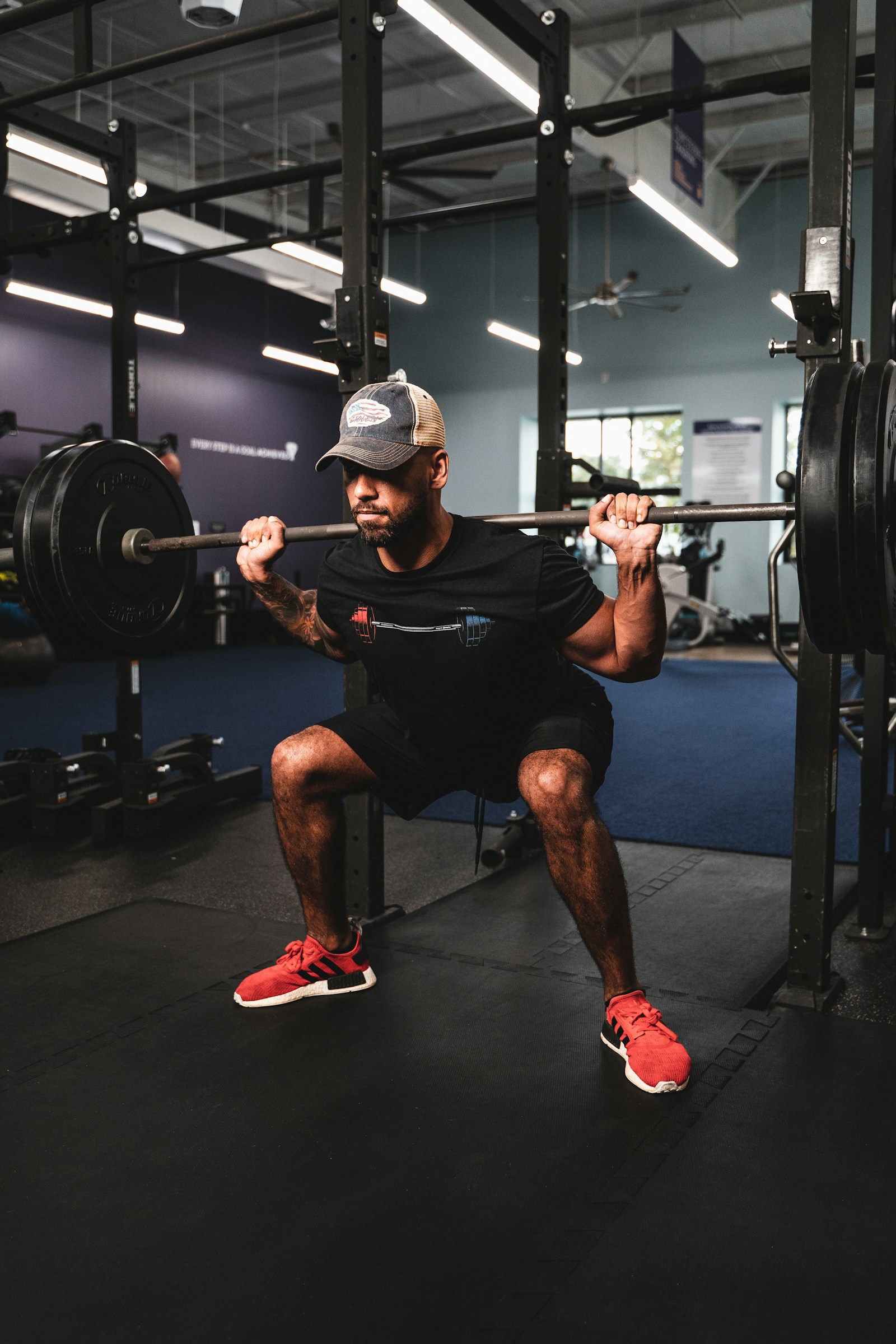
A squat works your hips and knees together. A biceps curl focuses on bending your elbow. Both can build strength, but they solve slightly different training problems.
For beginners, a useful approach is to build a manageable routine around compound movements, then add isolation exercises where you want more focused work. The right mix should help you progress while leaving enough energy to recover.
What is the difference?
Compound exercises involve movement at more than one joint. Squats, lunges, push-ups, rows, and leg presses are examples. Several muscle groups share the work.
Isolation exercises mainly involve movement at one joint, allowing you to put more emphasis on a particular muscle or muscle group. Examples include biceps curls, triceps extensions, leg curls, leg extensions, and calf raises. “Isolation” does not mean that only one muscle is active; other muscles still help control your position.
These categories describe the movement, not the equipment. A leg press machine is a compound exercise, while a dumbbell curl is an isolation exercise. And isolation is different from isometric: a curl moves your elbow, while an isometric hold maintains a position.
Why compound movements make a useful foundation
Compound exercises let you train several muscle groups in a small number of exercises. A squat challenges your thighs and hips. A row trains your back while your elbow flexors help pull. A push-up involves your chest, shoulders, and triceps.
That efficiency is helpful when you are learning to train or have limited time. You can practise pushing, pulling, squatting, and hinging without building a long list of exercises.
Start with a version you can control: a chair squat, an incline push-up against a sturdy surface, or a supported row. Heavy barbells are optional. Machines, body weight, bands, and free weights can all have a place.
Where isolation exercises help
Isolation work lets you give a muscle additional attention without repeating an entire compound exercise. After rows, for example, a small amount of curling can add direct work for your biceps.
It can also complement what a compound exercise does less well. In one study comparing leg presses and knee extensions, the exercises produced different patterns of muscle growth: the leg press trained additional hip muscles, while knee extensions produced more growth in the rectus femoris, one part of the quadriceps. This illustrates why exercise choice matters beyond simply counting how many joints move. It does not mean everyone needs both exercises. Read the direct comparison of leg presses and knee extensions.
Choose isolation work for a reason: a muscle you want to develop, an area receiving little direct work, or an exercise you enjoy and can recover from. You do not need an isolation exercise for every muscle from your first week.
What about smaller muscles and “micro muscles”?
“Micro muscles” is an informal phrase, not a formal anatomical category. People often mean smaller muscles that help control joint position, such as muscles around the shoulder’s rotator cuff or within the feet.
Do not confuse a small muscle with a stabilizer. Large muscles can stabilize, too, and a muscle’s role changes with the task. Compound movements already involve muscles working together to produce movement and keep you steady.
Isolation work does not automatically target these smaller stabilizers. A curl emphasizes your elbow flexors; it is not a general exercise for every small muscle around the shoulder. Focused work should match the action you want to train. A light shoulder external-rotation exercise, for example, serves a different purpose from a biceps curl.
Beginners do not need to hunt for hidden muscles or exhaust them separately. Controlled movement, appropriate resistance, and gradual progress are better starting points. Shaking or a strong burning sensation is not proof that you have activated a neglected muscle.
Recovery depends on the total work
Demanding compound exercises can tire several muscle groups at once. Isolation exercises often involve less of the body, but hard sets can still create substantial fatigue in the muscles doing the work. Neither category is automatically easy or hard to recover from.
Count the overlap. Your triceps work during pressing and again during triceps extensions. Your biceps help with rows and then work directly during curls. Changing exercises does not give those muscles a fresh start.
For a beginner, two strength sessions on nonconsecutive days can be a practical starting schedule. Allow at least a full day between training the same muscle group, with more recovery when needed. Mayo Clinic’s strength-training guidance recommends this spacing.
Keep regular sleep and meals part of the plan. If your usual weights repeatedly feel harder, your technique deteriorates, or fatigue makes you dread the next session, consider reducing sets or taking more rest. Soreness is information, not a score to maximize.
A simple way to combine them
This illustrative beginner session combines a few compound movements with a little focused work. Use comfortable variations and practise the movements with light resistance first.
- Chair squat or goblet squat: 1–2 sets of 6–10 controlled repetitions.
- Incline push-up or machine chest press: 1–2 sets of 6–10 repetitions.
- Supported row: 1–2 sets of 8–12 repetitions.
- Leg curl: 1 set of 10–15 repetitions for direct hamstring work.
- Optional biceps curl: 1 set of 10–15 repetitions if you want extra arm work.
Rest long enough to repeat each set with control. Finish with roughly two or three good repetitions still available rather than forcing every set to failure. Put the exercises you most want to improve near the start; for this session, that means the compound movements.
When the routine feels manageable across several sessions, add a few repetitions or a little resistance. Increase one thing at a time so you can tell how well you recover.
Choose a mix you can repeat
Compound movements offer an efficient way to train several muscle groups together. Isolation exercises give you more control over where you add extra work. Both can be useful, and neither needs to dominate every workout.
Start with a short routine, add focused exercises when they serve a purpose, and leave enough capacity for your next session. A manageable plan performed consistently gives you room to build strength over time.